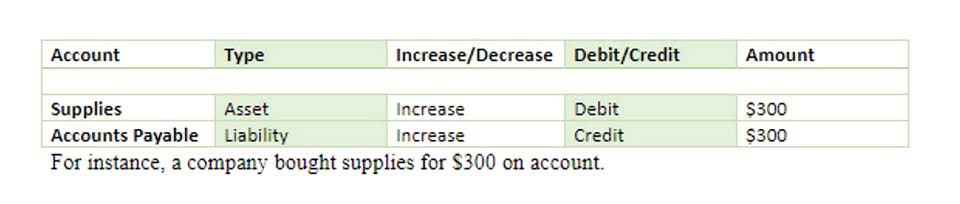
The accounting system of a business follows the double-entry system of bookkeeping. This system of bookkeeping states that business transactions will be recorded in two different accounts in the accounting system of a business. This is because, according to the double-entry concept, a transaction affects, at least, two accounts. These transactions are first analyzed and then recorded in two corresponding accounts for the business transaction. The purpose of both accruals and deferrals is to increase the accuracy of financial reports by incorporating elements that affect the performance or financial situation of the business. These adjustments provide more realistic figures that can be analyzed by managers and owners for decision-making purposes.

Thresholds for Recognition
- Deferrals have significant effects on financial ratios and cash flow, which are key indicators of a company’s financial health.
- An example of an accrual would be recording revenue for services provided in December on that month’s books, even if you receive payment in January.
- Countick Inc. is not a public accounting firm and does not provide services that would require a license to practice public accountancy.
- Deferrals allow for more accurate matching of expenses to revenues by spreading them over their relevant periods.
- The receipt of payment doesn’t impact when the revenue is earned using this method.
- This method is often simpler and more straightforward, making it appealing for small businesses or those with less complex financial activities.
- By recognizing revenue earned or expenses incurred ahead of the transaction, you’ll gain a more precise, forward-looking perspective on your finances.
Expenses recorded in accounts payable are considered liabilities, so keeping this category up to date is important. Under the Generally Accepted Accounting Principles (GAAP) established by the Financial Accounting Standards Board (FASB), accrual-based accounting is Financial Forecasting For Startups technically required only for publicly traded corporations. However, small businesses and startups may struggle to attract investors without offering the insights accrual and deferral accounting methods provide.
- This method is particularly beneficial for companies that offer credit to customers or receive credit from suppliers, as it helps in managing cash flows and understanding financial obligations.
- Deferrals, on the other hand, are often related to an expense that is paid in one period but is not recorded until a different period.
- Whether or not cash has been received, expenses incurred to create income must be reported.
- In contrast, deferrals occur after the revenue or payment has occurred but the transaction is spread across other accounting periods to accurately reflect its impact on the company’s performance.
- On the other hand, a deferred revenue results in the creation of a liability while a deferred expense generates an asset.
- The accounting system of a business follows the double-entry system of bookkeeping.
Teacher vs. Instructor: Key Differences in Teaching Roles
Deferred revenue, or unearned revenue, represents cash received in advance for goods or services not yet delivered, while prepaid expenses, such as insurance or rent, are recorded as assets until they are incurred. Both accruals and deferrals play crucial roles in providing a comprehensive picture of a company’s financial status and performance. Alongside these accounting principles, accounts payable, representing outstanding obligations to suppliers for goods or services purchased on credit, constitute a significant aspect of financial management.
Accruals And Deferrals: Timing Differences In Revenue And Expense Recognition

It may not capture the economic substance of transactions and can lead to distortions in financial statements. Let’s assume a company made a payment for their insurance which covers them for 6 months into the future. The amount that was made will be added to the current assets recorded as Prepaid Insurance or Prepaid Expenses. However, the amount that expires within the accounting period would be accrual vs deferral accounting reported as an Insurance Expense. An expense deferral is one where a payment was made before the accounting period, therefore, becoming an expense that is to be reported in the financial statements.
- Therefore, an adjusting entry would be necessary to defer the cost of the supplies that the company did not utilize.
- Accrual essentially involves recording revenues when they are earned and expenses when they are incurred, irrespective of when the actual cash flow takes place.
- In this system, businesses wait to record transactions until money actually moves.
- Accrual accounting is generally recommended for larger companies or those with complex financial transactions, as it provides a more accurate reflection of a company’s financial performance.
Accruals are adjustments made to recognize revenue or expenses that have been earned or incurred but have not yet been recorded. For example, if a company provides services in December but does not receive payment until January, it would recognize the revenue in December through an accrual. Deferrals, on the other hand, are adjustments made to defer the recognition of revenue or expenses that have been received or paid but relate to a future period. For instance, if a company receives payment for services in advance, it would defer the revenue recognition until the services are provided. Accrual accounting is a method that recognizes revenue and expenses when they are earned or incurred, regardless of when the cash is received or paid.
Accruals and Deferrals: Definition and Differences

That Prepaid Asset account might be called Prepaid Expenses, Prepaid Rent, Prepaid Insurance, or some other Prepaid account. It’s an asset because if company does not receive unearned revenue the benefit of what it has paid for, it would receive cash back (for example an insurance policy refund). One advantage is simplicity – deferral accounting involves straightforward entries where revenue or expenses are deferred until certain conditions are met.